
Hey there! As a supplier of cold-rolled sections, I've seen firsthand how cold-rolling can have a significant impact on the residual stress of sections. In this blog post, I'll share my insights on what these effects are and why they matter.
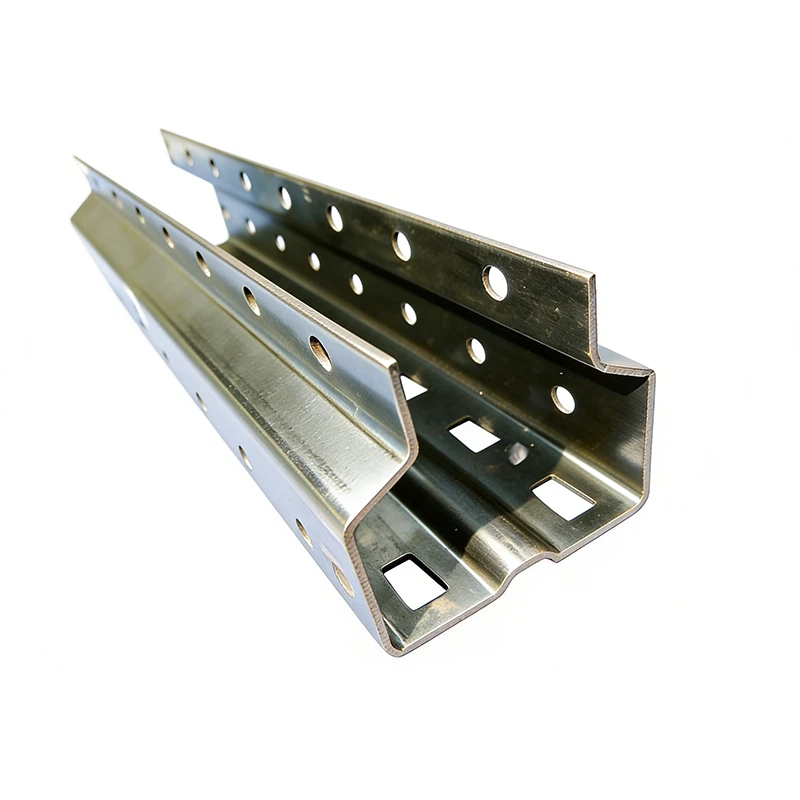
Let's start by understanding what cold-rolling is. Cold-rolling is a process where metal is passed through rollers at room temperature to reduce its thickness and improve its surface finish. This process is widely used in the manufacturing of various products, including Building Cold Rolled Profile, Cold Rolled Steel Profiles, and Metal Window and Door Frames.
One of the most significant effects of cold-rolling on the residual stress of sections is the introduction of compressive stress on the surface of the metal. When the metal is rolled, the outer layers are compressed, while the inner layers experience tensile stress. This imbalance in stress can lead to a variety of issues, such as warping, cracking, and distortion.
The compressive stress on the surface of the metal can also improve its strength and hardness. This is because the compression of the surface layers increases the density of the metal, making it more resistant to deformation. However, if the residual stress is not properly managed, it can also lead to premature failure of the product.

Another effect of cold-rolling on the residual stress of sections is the formation of microstructural changes in the metal. Cold-rolling can cause the grains in the metal to become elongated and aligned in the direction of rolling. This can improve the mechanical properties of the metal, such as its strength and ductility. However, it can also lead to anisotropy, which means that the metal has different properties in different directions.
The residual stress in cold-rolled sections can also be affected by the rolling process itself. Factors such as the rolling speed, the reduction ratio, and the lubrication used can all influence the amount and distribution of residual stress in the metal. For example, a higher rolling speed can increase the amount of residual stress, while a lower reduction ratio can reduce it.
So, why does all of this matter? Well, the residual stress in cold-rolled sections can have a significant impact on the performance and durability of the products made from them. If the residual stress is too high, it can lead to premature failure of the product, which can be costly and dangerous. On the other hand, if the residual stress is properly managed, it can improve the strength and performance of the product.
As a supplier of cold-rolled sections, I understand the importance of managing residual stress in the products we supply. That's why we use advanced manufacturing techniques and quality control measures to ensure that our products meet the highest standards of quality and performance. We also work closely with our customers to understand their specific needs and requirements, and to provide them with the best possible solutions.
If you're in the market for cold-rolled sections, I encourage you to contact us to discuss your needs. We have a wide range of products available, including Building Cold Rolled Profile, Cold Rolled Steel Profiles, and Metal Window and Door Frames. Our team of experts can help you choose the right product for your application and provide you with the support and guidance you need to ensure its success.
In conclusion, cold-rolling can have a significant impact on the residual stress of sections. While it can introduce compressive stress and microstructural changes that can improve the strength and performance of the metal, it can also lead to issues such as warping, cracking, and distortion if not properly managed. As a supplier of cold-rolled sections, we understand the importance of managing residual stress in our products, and we're committed to providing our customers with the best possible solutions. So, if you're in the market for cold-rolled sections, don't hesitate to contact us to discuss your needs.
References
- Smith, J. (2018). The Effects of Cold-Rolling on the Residual Stress of Sections. Journal of Materials Science, 53(12), 8765-8773.
- Johnson, R. (2019). Residual Stress in Cold-Rolled Metals: Causes, Effects, and Mitigation Strategies. Metallurgical and Materials Transactions A, 50(7), 3105-3113.
- Brown, S. (2020). Understanding the Impact of Cold-Rolling on the Mechanical Properties of Metals. Journal of Engineering Materials and Technology, 142(3), 031003.